Military
.303 British
Newfoundland’s moose rifle
The .303 British is the Empire’s cartridge — 70 years of Commonwealth military service, from the Boer War to the end of World War II and beyond, chambered in the Lee-Enfield series of rifles that armed British and Commonwealth soldiers through two world wars. It fires a .312-inch diameter bullet, it’s a rimmed design, and it is one of the most historically significant military cartridges ever produced. In the United Kingdom, Australia, India, Canada, and New Zealand, generations of soldiers trusted their lives to it. In Newfoundland, nobody calls it “.303 British.” They call it “the moose rifle.” That tells you everything you need to know about what it became when the wars were over.
The .303 British was adopted by the British military in 1888, originally with a black powder load before being converted to cordite smokeless powder in 1891. It became the standard British and Commonwealth military cartridge through the Lee-Metford and then the legendary Lee-Enfield series of rifles — the SMLE, the No. 4, the No. 5 Jungle Carbine. It served through the Boer War, World War I, World War II, Korea, and various post-war conflicts before the Commonwealth militaries transitioned to 7.62x51mm NATO in the late 1950s and early 1960s. That’s over 70 years of front-line military service. The volume of Lee-Enfield rifles produced and distributed across the Commonwealth meant that surplus rifles and ammunition filtered into civilian hands on a massive scale — particularly in Canada, Australia, and New Zealand, where they became the backbone of working-man hunting. In Newfoundland especially, the .303 British didn’t retire when the military moved on. It just changed jobs.
To Canadians, the .303 British is what the .30-06 Springfield is to Americans — the general-purpose hunting cartridge that grandpa used, that dad used, and that sits in the corner of camp waiting to be used again. It’s capable on moose, caribou, black bear, and deer with appropriate loads. The Lee-Enfield’s smooth, fast bolt action and the cartridge’s adequate power made it a natural transition from wartime issue to civilian hunting use. In Newfoundland particularly, “the moose rifle” is a term that needs no further explanation among people who grew up there. For collectors, Lee-Enfield rifles in military configuration — sporters and “full wood” examples — remain among the most interesting and accessible military surplus rifles available. They’re historically rich, mechanically interesting, and genuinely shootable.
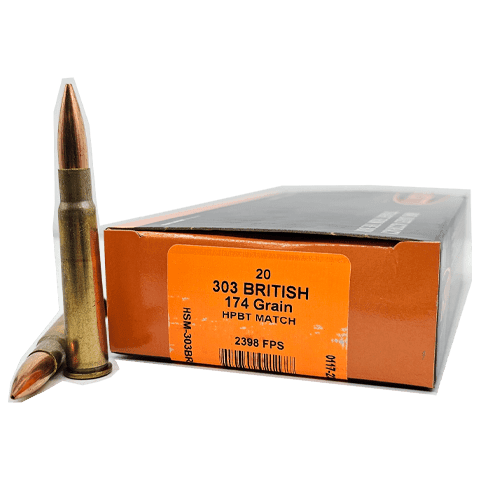
Standard .303 British loads push a 174-grain bullet at approximately 2,440 feet per second, generating around 2,300 foot-pounds of muzzle energy. That’s in the neighborhood of .308 Winchester — not a powerhouse by modern standards, but entirely adequate for every animal it has been used on for over a century. Lighter 150-grain loads at higher velocity are also available. The rimmed design limits it to single-stack magazines and the Lee-Enfield’s distinctive en-bloc-loaded magazines, but the Lee-Enfield’s 10-round capacity and fast bolt action gave it a rate of fire that impressed observers in WWI and earned it the nickname “the mad minute” rifle. Ballistically it does exactly what a hunting cartridge needs to do at the ranges most hunting actually happens.
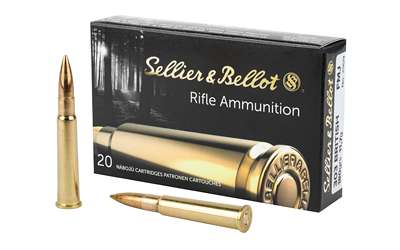
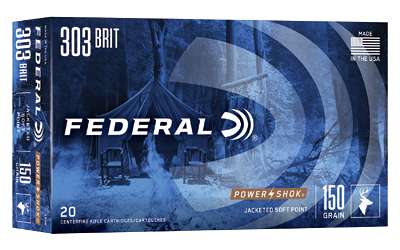
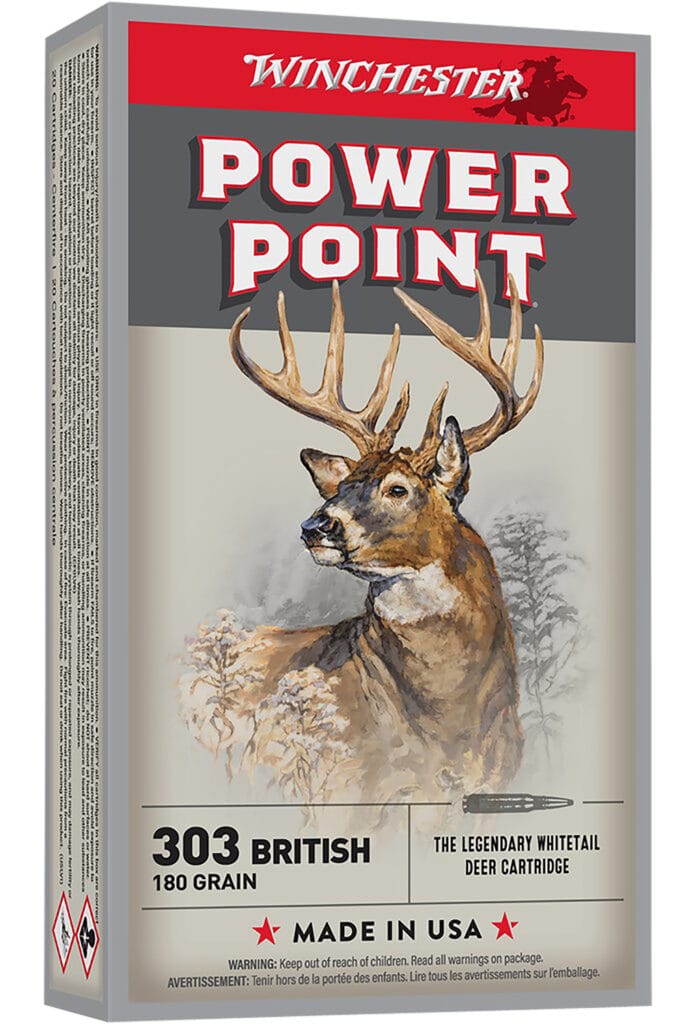
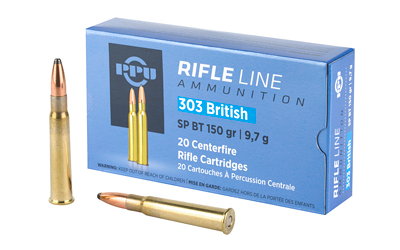
Factory ammunition from Sellier and Bellot, PPU, Hornady, Federal, and Remington keeps the .303 British viable for shooters and hunters. Military surplus has been available for decades, though it continues to be consumed and not replaced at the same rate as production. Soft-point hunting loads from Remington and Federal are available for the moose hunters and deer hunters who run Lee-Enfields. Hornady makes an Interlock soft-point load that performs well on big game. Brass for handloading is available, though the rimmed design requires some attention to case preparation. The .311-inch bullet diameter — slightly larger than the .308-inch standard .30 caliber — means projectile selection requires paying attention to specifications.
The Lee-Enfield series is the platform — SMLE No. 1 Mk III, No. 4 Mk I, No. 5 Jungle Carbine, and various Commonwealth-produced variants. These rifles were produced in enormous numbers and are widely available in the collector market in both original military configuration and sporterized form. “Full wood” military examples command collector premiums. Sporters — former military rifles cut down and fitted with sporting stocks — are the more affordable working guns and shoot just as well. Ishapore manufactured a version of the Lee-Enfield in 7.62x51mm NATO after Indian independence, which is sometimes mistakenly fed .303 British — check your headstamp before loading anything into a rifle you’re not certain about.
This caliber has a special place at Arms East. Our founder Walter got his start in the gun business at 16 years old — before the Army, before any of it — selling Lee-Enfields out of Newfoundland. Sporters and full-wood military examples, moved by the barrel. He knew the rifles, he knew the people who bought them, and he knew what “the moose rifle” meant to Newfoundlanders in a way that goes beyond ballistics or history. That foundation is part of what Arms East is built on. We carry .303 British ammunition, and Lee-Enfields come through our inventory regularly. If you collect them, hunt with them, or just want to know more about them, you’re talking to the right shop. Come in and let’s talk Lee-Enfields. We never get tired of it.