Military
.300 Norma Magnum
SOCOM’s long-range pick
The .300 Norma Magnum is not a sporting cartridge that got adopted by the military. It’s a weapon system cartridge that civilians happen to be able to buy — and that distinction matters. When the U.S. Special Operations Command ran its Advanced Sniper Rifle program looking for a next-generation precision cartridge that could reach farther, hit harder, and defeat more barriers at extreme range than the .338 Lapua or .300 Win Mag, the .300 Norma Magnum is what they selected. SOCOM doesn’t make those decisions lightly or for marketing reasons. They make them because the ballistics are genuinely superior for the mission.
That you can walk into a gun store and buy a rifle chambered in it is a remarkable thing. Take a moment to appreciate that before we get into the specs.
The .300 Norma Magnum was developed by Norma Precision in Sweden, based on the .338 Lapua Magnum case necked down to .308 caliber. It was designed to run very heavy, very high-BC .30-caliber projectiles — specifically the 230-grain class bullets — at velocities that maximize their aerodynamic advantage at extreme range. The Lapua-based case provides excellent case head geometry, outstanding brass quality, and the capacity to push those bullets to meaningful velocities without running at unsafe pressure.
SOCOM’s ASR (Advanced Sniper Rifle) program evaluated multiple cartridges for extended-range precision fire and selected the .300 Norma Magnum. The Accuracy International AXMC and similar platforms were adopted in this chambering. The requirement was first-round hits at ranges where the .300 Win Mag runs out of steam — targets at 1,500 to 2,000 meters where barrier penetration and energy retention both matter. The .300 Norma Magnum answers that requirement.
Running a 230-grain class bullet at 2,800 to 2,900 fps — which the .300 Norma achieves — produces ballistics that are genuinely remarkable. The very high BC of those long, heavy projectiles combined with the muzzle velocity means this cartridge stays supersonic past 1,600 yards in standard conditions and retains terminal effectiveness at distances that other cartridges can only reach on paper. Wind drift at 1,000 yards is lower than most .30-caliber magnums because the BC is doing more work per unit of velocity than smaller, lighter bullets.
This comes with appropriate tradeoffs. Recoil is substantial — a heavy rifle with a quality brake is not optional, it’s mandatory. Muzzle blast is significant. Barrel life is modest. This is not a casual range day cartridge. It is a mission-specific precision tool, and every characteristic reflects that design priority.
Military and government precision applications are the primary use case for which this was designed. Extreme long-range target shooting — ELR competition at 1,500 to 2,000+ meters — is the natural civilian application. This is a legitimate ELR cartridge that competes at the highest levels of that discipline. It’s not a deer hunting round. It’s not a practical precision rifle competition round. It’s for shooters who measure their engagement distances in the hundreds of meters beyond what normal long-range shooting addresses.
Trophy hunting at extreme range — the controversial practice of shooting game at very long distances — is occasionally cited as an application. The ballistics certainly support it. Hunters who pursue it do so with this level of cartridge because anything less is inadequate. Regardless of your opinion on that practice, the capability is there.
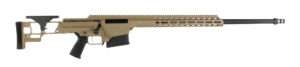
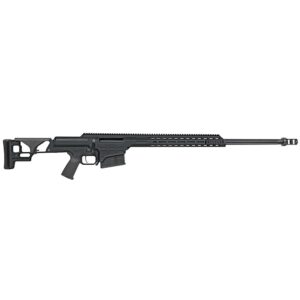
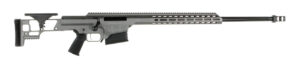
This is not a cartridge with dozens of platform options — it was designed for specific professional-grade rifle systems and the civilian market reflects that. Accuracy International AXMC, Barrett MRAD, McMillan TAC-300, and various custom precision rifle builders offer it. Proof Research, GA Precision, and other high-end custom shops have built rifles in .300 Norma Magnum for competitive ELR shooters. These are serious, expensive, purpose-built platforms.
Budget options don’t really exist in this chambering and they wouldn’t make sense if they did. The cartridge requires a rifle capable of wringing out its accuracy potential, which means actions with quality barrels, precise chambers, and stocks or chassis systems that provide consistency. Pairing a .300 Norma Magnum chamber with anything less than a quality precision platform defeats the purpose entirely.
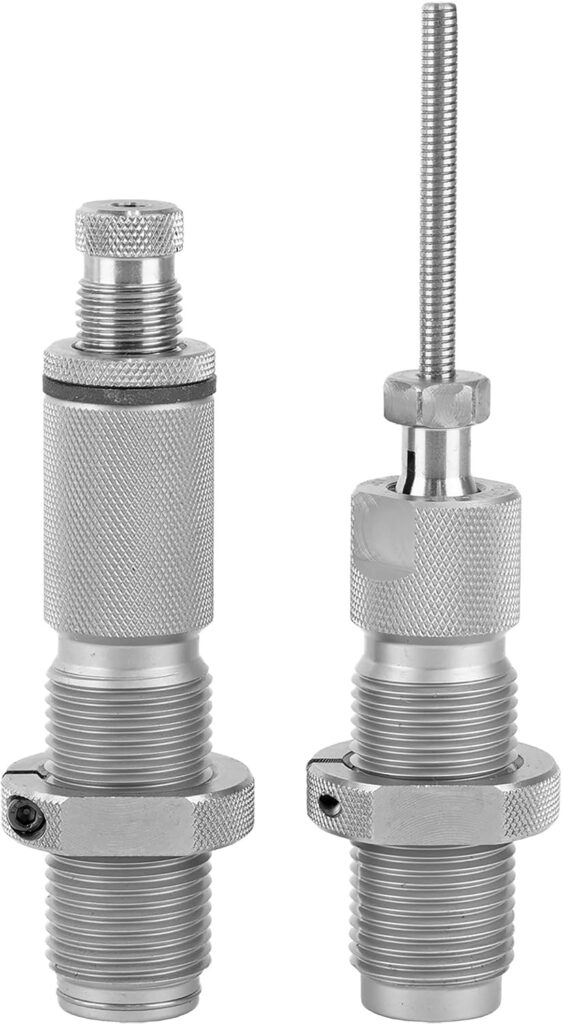
Norma produces factory loads, as do a handful of precision ammunition manufacturers. This is not walk-in-and-grab-a-box territory — you order it, you plan for it, and you reload it. The reloading community for .300 Norma Magnum is dedicated and produces excellent resources, because the people who shoot this cartridge are serious precision shooters who understand the value of handloaded, tuned ammunition. Lapua-quality brass means exceptional case life and consistency.
Factory ammunition pricing starts around $100 per box of 20 for quality loads and goes up from there for premium precision loads. Per-round costs for serious ELR shooting make reloading essentially mandatory. This is not a cartridge you burn through casually. Every round is an event, and the economics encourage treating it that way.
If you’re looking at the .300 Norma Magnum, you already know what you’re about. Arms East doesn’t stock this one on impulse — we carry it for the customers who have done the research, have the platform in mind, and need a shop that takes it seriously. We can source factory ammunition, connect you with quality brass and projectile components for reloading, and have an intelligent conversation about rifle options without blinking at the price tags involved.
This is the kind of cartridge where buying from a knowledgeable source matters more than shopping on price alone. Come talk to the Arms East staff about what you’re building and what you’re trying to accomplish. We’ll engage with it honestly, and if something else makes more sense for your actual shooting program, we’ll tell you that too.